Coin Silver vs. Sterling Silver: How to Tell Them Apart and What They're Worth
If you have old silver spoons, a ladle, or a set of sugar tongs from a family estate, you may see a mark that says COIN instead of STERLING. That one word changes how the piece is valued, and it's easy to misread.
Coin silver and sterling silver are both real silver. Neither is silver plate. But they come from different eras, they have different purity, and they are marked differently. Here's how to tell them apart and what each one is worth when you sell.

The Short Answer
Coin silver | Sterling silver | |
Silver content | About 90%, sometimes lower | 92.5% |
Common marks | COIN, C, PURE COIN, DOLLAR, STANDARD, or a maker's name only | STERLING, 925, .925, or a hallmark |
When it was made | Mostly late 1700s to the 1860s in America | Most American silver after the 1860s, and still today |
Value | Melt value, plus a premium for some early or rare pieces | Melt value, plus a premium for some brands and patterns |
What Is Coin Silver?
Before the late 1800s, American silversmiths often made flatware and hollowware from melted-down coins. There was little other silver to work with. Because U.S. silver coins were about 90% silver, that became the rough standard for the finished pieces.
The purity wasn't tightly controlled. Many coin silver pieces test close to 90%, but some older pieces test lower. That's one reason a buyer will test coin silver rather than assume its content from the mark.
Coin silver has nothing to do with collecting coins. It describes the metal, not the item. If you're trying to figure out whether an actual coin is silver, see our guide on how to tell if a coin is silver.
What Is Sterling Silver?
Sterling silver is 92.5% silver, with the rest usually copper for strength. It's the long-standing British standard. Tiffany & Co. was one of the first American firms to adopt it in the 1850s, and by the late 1800s most American makers had switched over.
That's why most silver flatware made in the U.S. after that point is stamped STERLING or 925, and why coin silver is mostly found on older pieces.
How to Tell Coin Silver From Sterling
1. Look for the Marks
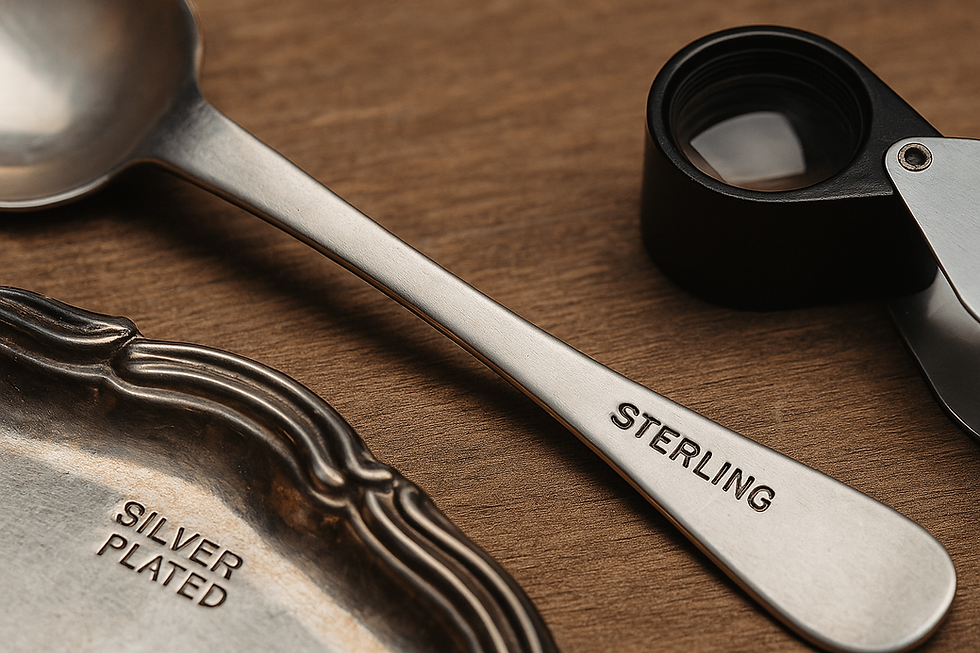
Check the back of spoon and fork handles, or the bottom of bowls and cups. Use a magnifying glass. Old marks are small and often worn.
Coin silver marks: COIN, C, PURE COIN, DOLLAR, STANDARD, or PREMIUM. Many pieces only show the maker's name or initials with no purity mark at all.
Sterling marks: STERLING, STER, 925, or .925. British sterling uses hallmarks such as a walking lion.
Look-alike marks: Some early American makers stamped small symbols that imitate British hallmarks. These are called pseudo-hallmarks. They don't guarantee sterling, so the piece still needs testing.
2. Consider the Age and Style
Coin silver flatware tends to be thin and light, with simple shapes. Plain fiddle-handle spoons, coffin-end spoons, and small engraved initials are common. If a piece looks hand-made and dates to before the Civil War, coin silver is likely. Ornate, heavy patterns from big-name makers are more likely to be sterling.
3. Rule Out Silver Plate and "German Silver"
Marks like EPNS, EP, SP, or Silver Plate mean the piece is silver-plated. It has very little silver and little metal value. Marks like German Silver or Nickel Silver mean there's no silver in it at all. Those are nickel alloys. Our guide to sterling silver vs. silver-plated covers how to spot plate.
Which Is Worth More?
By metal content, sterling is worth slightly more, but the gap is small. Silver value is based on weight in troy ounces times purity, multiplied by the day's silver price.
Here's a simple example. Take 20 troy ounces of each:
Coin silver at 90% contains 18 troy ounces of pure silver.
Sterling at 92.5% contains 18.5 troy ounces of pure silver.
That's a difference of under 3%. For most people selling a drawer of old spoons, coin silver and sterling pay out close to the same per ounce.
Collector value is where they can split. Common coin silver spoons usually sell close to melt value. But pieces by known early American silversmiths, and some regional work, can sell for more than their silver because collectors want them. The same is true of sterling from brands like Tiffany, Gorham, or Georg Jensen, or from patterns people are trying to complete.
What About Coin Silver Flatware?
Coin silver flatware is the most common form you'll find. Teaspoons, tablespoons, serving spoons, ladles, and sugar tongs show up often in estates. Full matched sets are less common than with sterling, so mixed lots are normal.
A few things to know before you sell:
Coin silver pieces are often lighter than they look, so weigh them before you guess at value.
Monograms and engraved initials are common and usually don't hurt melt value.
Knives often have hollow handles filled with other material, so only part of the weight is silver.
Candlesticks and some hollowware can be weighted on the bottom, which lowers the silver weight.
For more on old flatware, see how to know if your old silverware is worth selling.
Don't Polish It First
Tarnish doesn't lower melt value. Heavy polishing can wear down old marks, which makes a piece harder to identify, and it can hurt collector value on early pieces. Bring it in as you found it.
The Quick Version
Coin silver: about 90% silver, mostly pre-1870 American, marked COIN, PURE COIN, DOLLAR, or just a maker's name.
Sterling: 92.5% silver, marked STERLING or 925.
Value: close to the same per ounce. Early makers and collectible brands can add a premium.
Not silver: EPNS, Silver Plate, German Silver, and Nickel Silver.
Testing: marks are clues. Testing confirms the actual silver content.
Get Your Silver Checked
Not sure if you have coin silver, sterling, or plate? Bring your pieces to our East Hanover or Hamburg location, or get an offer online and talk it through over the phone. We test everything in front of you, explain what you have, and there's no obligation to sell. Call (973) 428-1900.